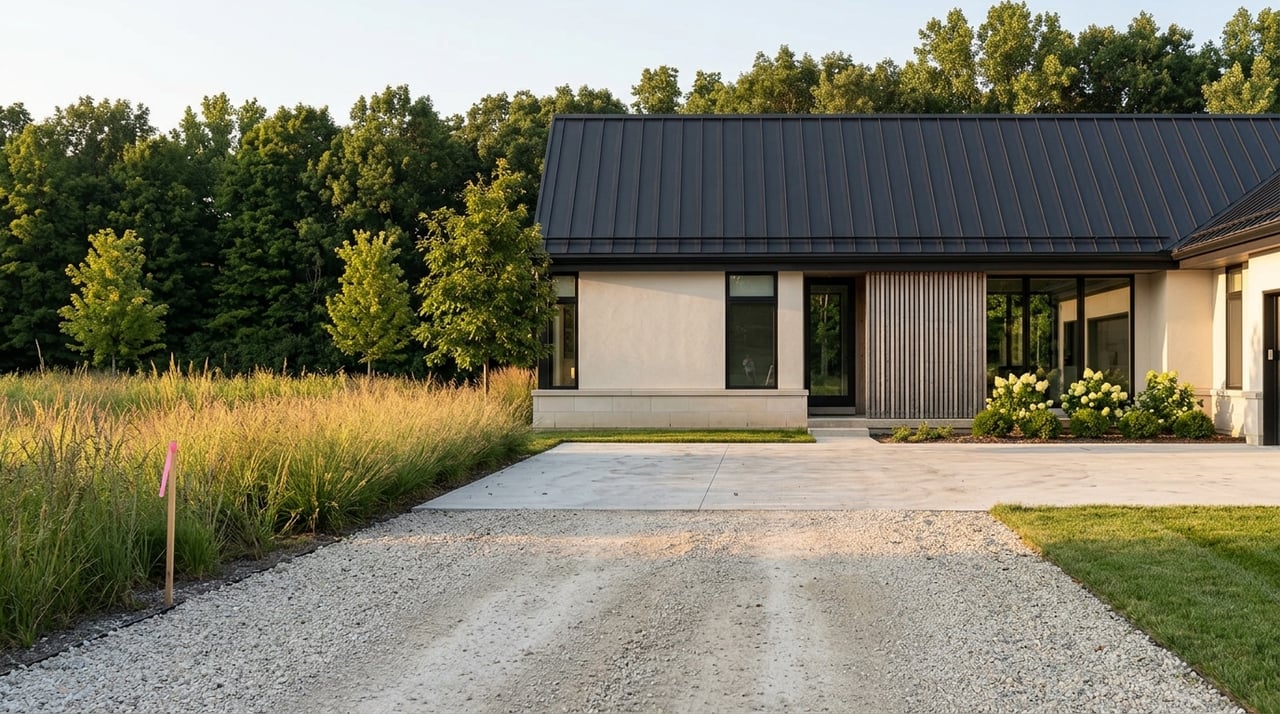
Smart Guide to Buying Land and Acreage Near Maineville
April 2, 2026
April 2, 2026
Buying acreage near Maineville can look simple on paper. A parcel may show five, ten, or twenty acres, but that number alone does not tell you whether the land fits your plans. If you are thinking about building, holding land for the future, or creating a more private homesite, you need to look beyond the listing headline and study how the parcel actually functions. This guide will help you evaluate acreage near Maineville with more confidence, so you can spot opportunities, ask better questions, and avoid expensive surprises. Let’s dive in.
One of the first things to confirm is where the parcel is actually located from a regulatory standpoint. Land near Maineville may fall under the Village of Maineville, Hamilton Township, or unincorporated Warren County, and each can involve different zoning and approval steps. The Village of Maineville notes that property owners should work through its own zoning department and planning commission, while surrounding areas may be governed by township or county processes.
Before you assume what can be built or how the land can be used, verify the parcel’s jurisdiction through the Village of Maineville zoning resources. This step matters because acreage that looks similar on a map may be treated very differently depending on where the boundary lines fall.
Listing remarks can be helpful, but they should not be your main source for land decisions. Warren County makes parcel details available through the Auditor’s real estate records, which include ownership information, legal descriptions, map tools, appraisal data, and related parcel details.
You should also review recorded documents through the Recorder’s office, especially if you want to confirm deed history, easements, or other recorded matters tied to the property. For acreage, this early record review can reveal issues that affect value and use long before you spend money on deeper due diligence.
Acreage can be appealing, but usable access is just as important as lot size. A parcel may have road frontage yet still present challenges related to driveway placement, culverts, or access approvals. In Warren County, the Engineer handles access and driveway culvert permits for county and township roads, and parcels on state highways involve Ohio Department of Transportation coordination.
The Warren County Engineer permit information is a smart place to start if you are evaluating how a future home or driveway could work on the site. If frontage changes along a county or township road, county standards also require a preliminary access permit application.
For acreage purchases, a survey is often one of the most valuable tools in the process. County survey-plat standards require plats to show acreage, deed references, easements, right-of-way widths, adjacent owners, and other location details that can directly affect your plans for the property.
That is why buyers should avoid relying on fence lines, old markers, tax maps, or listing photos alone. According to the Warren County survey and plat requirements, surveys and plats are required for boundary changes and resurveys, and they help clarify the real shape and limitations of the parcel.
A large parcel does not always mean you have a large building envelope. The buildable area, sometimes called the building envelope, is the part of the property that remains after setbacks, easements, right-of-way issues, drainage patterns, floodplain factors, and utility constraints are taken into account.
This is where many buyers get tripped up. Warren County’s land-use planning materials emphasize protecting wetlands, floodplains, water resources, and woodlands, while discouraging development on slopes greater than 12 percent. Reviewing these factors early can help you understand where a house, driveway, septic field, or accessory structure may realistically fit on the site.
Drainage is not just a technical detail. It can shape whether a parcel is practical for building and how costly site work may become. The county’s stormwater guidance shows that multiple agencies may be involved, including the Engineer for stormwater regulations and driveway culverts, and the Soil and Water Conservation District for runoff control, erosion, sediment review, and drainage-related concerns.
You should pay close attention to low spots, water flow, retention needs, and floodplain location. Warren County identifies special flood hazard areas as FEMA-designated floodplain areas with a 1 percent or greater annual chance of flooding, and the county plan also highlights hydric soils and steep slopes as sensitive conditions. These details can have a major effect on the usable footprint of the land.
Many buyers assume acreage near established communities will have public utilities available. That is not always the case. While Warren County Water & Sewer serves areas including Hamilton Township and the Village of Maineville, the county health district notes that many residents still rely on individual onsite sewage systems because sanitary sewer is not accessible across a large part of the county.
That means utility research should be parcel-specific, not based on the broader area alone. You want to know whether the property can connect to public service or whether your plans will depend on private systems.
If a parcel is not served by sanitary sewer, septic feasibility should move near the top of your checklist. The Warren County Health District requires a soil evaluation by a qualified soil evaluator, a system design by a qualified system designer, and a site review application before a permit to install an onsite sewage treatment system can be issued.
In practical terms, this means a parcel may look buildable but still face real limitations based on soils and site conditions. The Health District’s sewage and water guidance makes it clear that onsite sewage approval is a defined process, not a casual assumption.
If the parcel will need a private water source, that process also has formal requirements. The Warren County Health District states that wells, cisterns, hauled water storage tanks, and ponds used for drinking water all require a permit before installation or alteration.
After installation, the district inspects the system and collects a water sample before final approval. You can review those steps through the county’s private water system requirements. This is another reason raw land buyers should budget both time and due diligence costs before closing.
Zoning can affect far more than whether you can build a home. It may also shape setbacks, structure placement, accessory buildings, and what approvals are needed before work begins. In Hamilton Township, new residences, buildings, additions, decks, signs, and accessory structures require an approved zoning certificate before work starts, and the county building department will not issue a building permit without it.
The township’s zoning application guidance also requires a site plan showing setbacks and dimensions. If your target parcel is in the Village of Maineville, the village directs property owners to contact zoning before starting construction or remodeling and provides access to local zoning materials through its website.
A common mistake is thinking any five-acre parcel near Maineville will automatically support a home, outbuildings, or agricultural use. That is not guaranteed. Hamilton Township’s zoning code includes an agricultural exemption framework for certain agricultural uses and accessory structures on lots of 5 acres or more, but owners still need to file an agricultural exemption application, and additional restrictions can apply in some platted subdivisions.
That means parcel size alone does not answer the key question. You still need to confirm zoning treatment, lot configuration, access, utilities, septic feasibility, floodplain position, and easements before making a decision.
When you evaluate acreage near Maineville, a clear process can save time and protect your budget. Start with the basics, then move into site-specific testing and approvals.
Here is a practical checklist to use:
Acreage purchases often involve more moving parts than a typical home sale. You may be weighing survey results, site plans, zoning questions, septic feasibility, utility access, and long-term resale potential all at once. Having a local real estate guide can help you organize that process, identify the right questions early, and connect the land’s features to your actual goals.
If you are considering land near Maineville and want a strategic, detail-driven perspective, Kelli Rae Hurst can help you evaluate the opportunity with clarity and confidence.
Stay up to date on the latest real estate trends.

Whether buying or selling, limited-service staging and/or full-service design, what you need to enhance your property to its fullest extent in relation to your goals, timeline and budget will be determined.