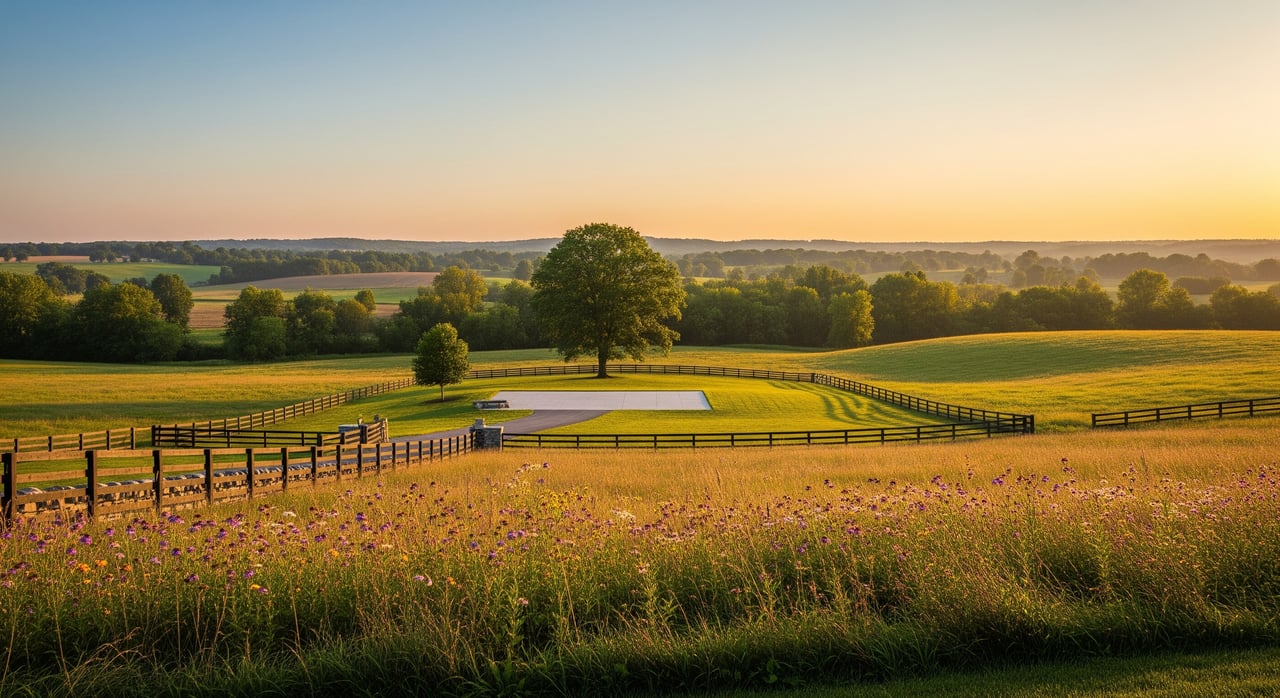
Buying Land in Warren County Ohio: A Practical Starter Guide
January 1, 2026
January 1, 2026
Buying land around Morrow can feel thrilling, right up until you start hearing about zoning codes, septic tests, and driveway permits. If you are picturing a future homesite or hobby acreage in Warren County, you want a clear plan so you can move forward with confidence. In this starter guide, you’ll learn how to verify if a parcel is buildable, what utilities really cost, how financing works, and what timelines to expect. You’ll also see how an experienced local agent can coordinate the process and keep you on track. Let’s dive in.
The rules change quickly in Warren County. A parcel inside the Village of Morrow can follow different zoning, utility access, and permitting standards than a lot just outside the village line in an unincorporated township. Your first step is to confirm where the land sits and which office oversees it.
Contact the Village of Morrow zoning office if the parcel is inside village limits. For unincorporated areas, reach out to the Warren County Planning and Zoning Department. Ask for the zoning district, permitted uses, minimum lot size, setback rules, and any conditional uses. If you plan to keep animals, add an outbuilding, or operate a home-based business, verify those uses directly with the zoning administrator.
Legal, insurable access is non-negotiable. Confirm that the parcel fronts a public road or has a deeded access easement. If access is by a private lane, request the maintenance agreement and understand who pays for upkeep and snow removal.
Before planning a driveway, speak with the Warren County Engineer. Many parcels need a driveway or entrance permit to cut into a county or township road. Ask about culvert requirements and sight-distance standards. If the parcel sits on a state route, permit rules can be different, so clarify which agency has jurisdiction.
Utilities are often the largest variable cost on rural land. Start by confirming whether public water or sewer is available. If not, plan for a private well and an on-site septic system. The Warren County General Health District oversees septic permits and will guide you on soils and system types.
For wells, you will need to follow state and county well construction rules. A well driller can review nearby drilling logs to help set expectations on depth and yield. For septic, a soil or site evaluation is typically required before approval. Setbacks from property lines, wells, streams, and buildings are strict, and they shape the buildable area of your lot.
Electric service availability and extension costs can vary widely based on distance to the nearest pole. Natural gas is not available in many rural areas, so plan for propane or electric heat. Broadband can range from fiber to fixed wireless or satellite. Start with coverage maps, then verify with providers who serve your specific road and address.
Drainage matters too. Walk the property after a rain to spot ponding or ephemeral streams. If you plan grading, a pond, or a long driveway, a civil engineer can advise on stormwater and erosion control.
Order a licensed boundary survey early in your contract period. A survey confirms lot lines, easements, encroachments, and road frontage. For complex sites or lender requirements, consider an ALTA-level survey.
Next, complete a soil and septic feasibility review. A certified soil scientist or septic designer can identify the best location for a system and advise on type and expected costs. Many buyers coordinate this during the inspection window so they can make an informed decision before proceeding.
Check floodplain status using FEMA maps and ask the county floodplain administrator for guidance if any portion is in a regulated zone. Review the National Wetlands Inventory to flag potential wetlands or streams that could affect build areas or require permits. Complex sites may benefit from a wetlands specialist.
Ask your title company to run a full title search and provide a commitment. You are looking for easements, liens, mineral rights, conservation restrictions, and any recorded covenants or homeowners’ association rules. Title insurance is strongly recommended to protect against hidden defects.
Easements can grant utility access, limit where you can build, or require a shared driveway. Conservation easements can restrict new construction. Read every recorded document so you understand the limits before you close.
If you are buying with an eye toward splitting the land in the future, review the Warren County subdivision regulations up front. Many new lots must front a public road or an approved private road, and they must meet minimum lot size and frontage rules. Discuss access, spacing for multiple septic systems, and private road standards with county staff before you assume a split is possible.
Financing raw land differs from traditional home loans. Land and lot loans usually require higher down payments, often 20 to 50 percent, shorter terms, and higher rates. If you plan to build, explore construction-to-permanent loans that convert to a mortgage after completion, or construction-only loans that you refinance when the home is finished. Some sellers may offer financing, and certain rural areas can be eligible for USDA programs, depending on income and property location.
Lenders typically want a qualified builder, a signed construction contract, detailed plans and budgets, permits or permit-ready plans, and a strong credit profile. Expect inspections during the construction draw process and interest-only payments until the home is complete.
Every parcel is different, but this high-level timeline can help you plan. Some steps overlap and can be faster or slower depending on season and availability.
Build in buffer time for septic approvals, utility extensions, weather, and contractor schedules.
Buying land is a team effort, and coordination matters. I introduce you to trusted local pros, request the right verifications, and organize timelines so you can make confident decisions. During your contract window, I help coordinate the title search and title insurance, connect you with licensed surveyors, septic designers, and well drillers, and facilitate conversations with zoning staff, the county engineer, and utility providers. If floodplain or wetlands are a concern, I source the appropriate environmental consultants.
You will review and approve all proposals, designs, and loan documents, while I keep the process moving and aligned with your goals. The result is a smoother path from offer to closing, with clear eyes on costs, permits, and buildability.
When you are ready to explore acreage around Morrow and greater Warren County, I am here to help you move from idea to action with clarity and care. Let’s create a plan that fits your timeline and vision, and bring the right local experts to the table at the right time. Reach out to Kelli Hurst to start a conversation about your goals.
Stay up to date on the latest real estate trends.
Whether buying or selling, limited-service staging and/or full-service design, what you need to enhance your property to its fullest extent in relation to your goals, timeline and budget will be determined.